
Western vision
education, space and time

The more you learn, the more you question the world. As we grow, we are fed with standard knowledge to simplify our vision of the world. We are taught how to read the clock, how to use a map, how to pronounce words, but we never question these tools, as they are useful, simple, and convenient systems that make our life easier.
I’m sitting on a bench in a beautiful park in Florence, reading a book by Mauro Varotto1, and I feel the urge to write. Some ideas collide, merge and dots connect, leaving me with a commonplace that I think would sound too cliché to reveal in this introduction. So let me first guide you through my reflections on education, space and time.
Education
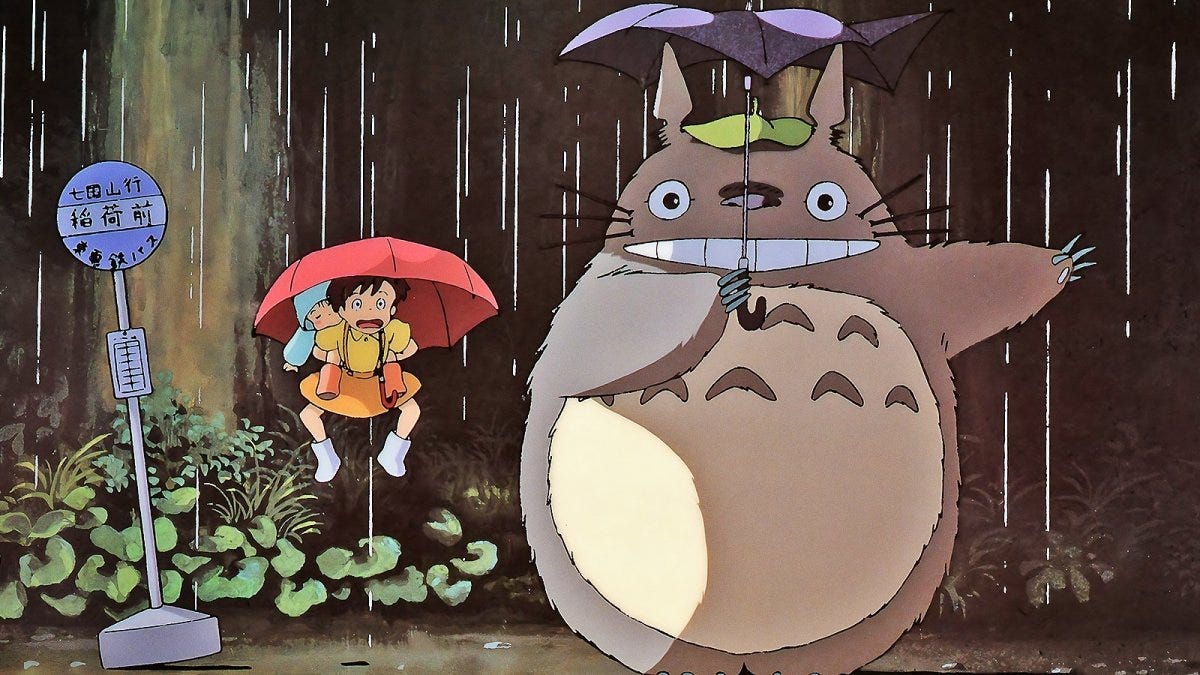
I deeply enjoy watching Studio Ghibli movies; they are true works of art. The drawings are impeccable, every character has their own unique personality and every detail is taken into consideration. At first, I thought it was the graphics what mesmerised me the most of these movies. But after talking with a friend about My Neighbor Totoro, my favourite animation of the Japanese studio, she said its beauty was “in the unsettling”. For those of you who watched this movie and think that there’s nothing unsettling about a girl discovering a big fantastical animal in the forest, think about Totoro's behaviour: he never talks. Even when he smiles he looks slightly eerie. The audience doesn’t know anything about him. Yet he is the main character of the story for a reason: he is kind and caring. He's not loud or flashy in his actions, nor bright or shiny. He doesn’t need to show or prove anything to anyone. He's just there, being supportive through his actions.
Meanwhile, modern children's cartoons are always full of colours, sparkle and speed, but most importantly, there is always a line between “good” and “bad”. There is a clear division, that can be sensed even from the beginning, visible through the behaviour and traits of the characters. We are educated to see the world this way, so we then apply it in our everyday life. I believe this is also connected with the false idea that we humans have of being the same person our entire lives. We stick to a defined identity, and we must commit to it for the rest of our existence2. But this isn’t just a comparison between “then” and “now”, keep in mind the main idea of this paragraph: every generation and society has their own worldview, its Weltanschauung.
Space and time
In the next reflection I’d like to share with you two ideas that are really intertwined with each other, and will come together with the conclusion we just drew. In the mentioned book by professor Varotto, I learned about the true essence of geography. Geography you say? Oh no, not that geography, not the mere memorisation of capitals, regions and economic sectors. That’s the simplified version of geography we were educated on. In his lessons, professor Neve3 explains the differences between place and space. The space is the abstract field in which we build our understanding of the world, while a place only exists through relationships between its elements and the perceiver. For a long time in Europe, people travelled using itineraries, tools that were designed for the main transport system of the time: walking. Only after the modern age, with the creation of the nation-states, we started seeing countries, regions and cities in a much more defined way, thanks to increasingly precise maps. Nevertheless, it was already with the colonialism mentality that we started inventing the division of space. Bear in mind that this division of space we see on the maps, does not indicate places. A place can’t be reproduced on a map, because of its infinitely complex relations with the environment. Today we still think of space as something that can be filled or emptied, that we can have or control. But professor Varotto explains it very well: “Non esistono oggetti o fenomeni collocati nello spazio, ma oggetti e fenomeni che creano lo spazio.” (“There are no objects or phenomena placed in space, but objects and phenomena that create space.”)
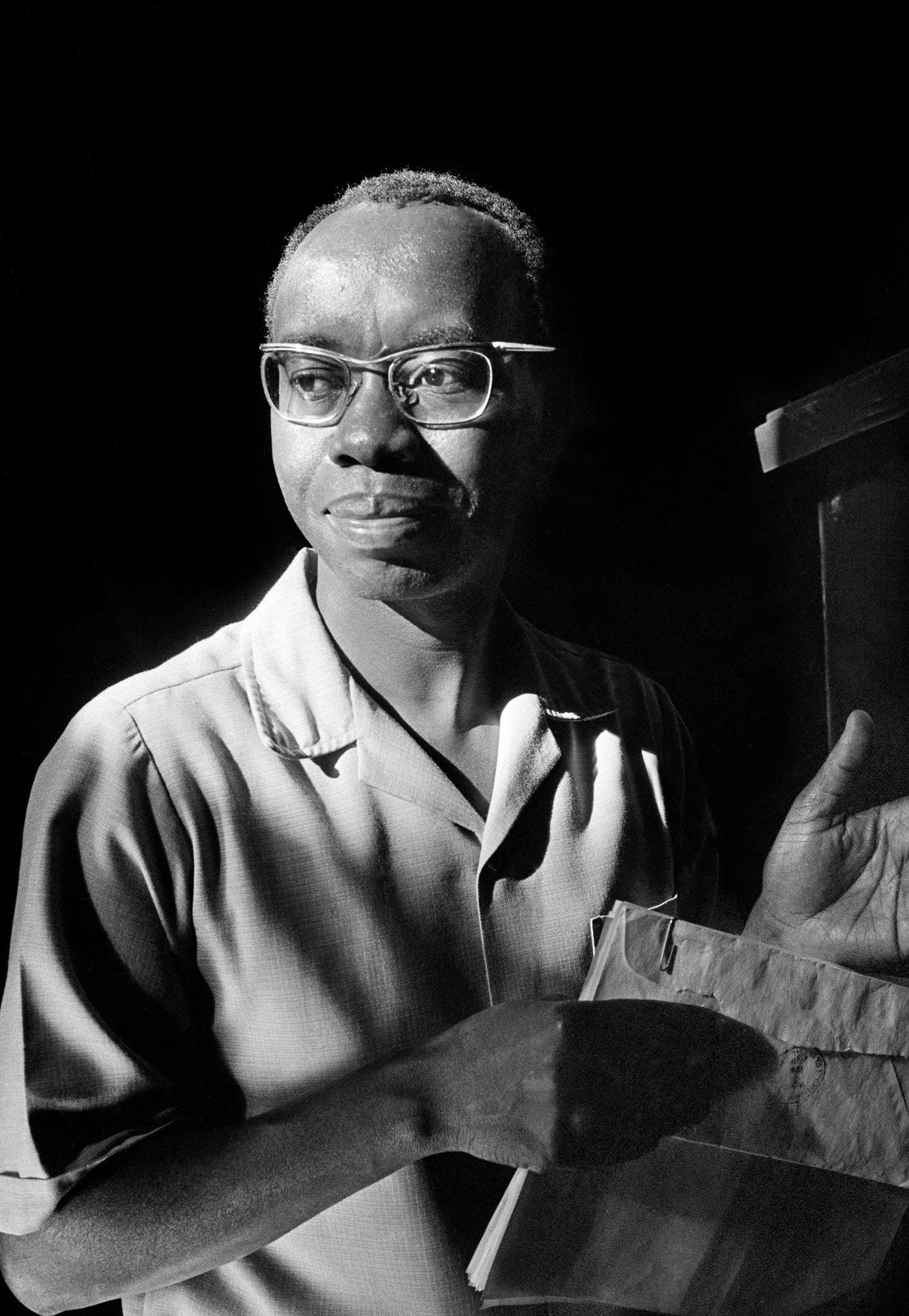
This concept of creating space immediately reminded me of John Mbiti’s theories. He was a great Kenyan philosopher that studied the concept of time in many African societies, arguing that experiences and events shape our perception of time. Instead, in our society time is conceived as a strict limit, and every single moment is seen as a precious opportunity that can’t be wasted. Productivity is the measure for our success. Mbiti explains that time is divided into sasa, which is the very present, and zamani, the huge container of the past events4. The idea of a distant future is not considered, because it doesn’t exist yet. Therefore, time is not an empty void that ought to be filled, but instead it’s something that can be created and generated through lived moments.
How biased our society can be then, confined in its closed cultural structures. We can’t even imagine the potential of other ways of thinking and seeing life. Finally, I conclude with an invitation to question the world, and the systems of your perception. From the ideas and knowledge we’ve been fed, to the very structures of our society. Why do we tell the time by using the clock? How can we know where we are based on a map? What could be different from the movies we’re watching?
See you on the next!
Ana
Varotto, M. (2015). Il primo libro di geografia.
James Clear opened my mind on the importance of identity thanks to his book Atomic Habits (2018).
Mbiti, J. (1969). African Religions and Philosophy.
Grande Ana molto interessante